Compliance
State-by-State NAR Commission Disclosure Rules: The 2026 Guide
Important Disclaimer
This article provides general guidance and is not legal advice. Disclosure requirements change frequently and vary by state, MLS, and local association. Confirm current requirements with your broker, your state regulator, and legal counsel before relying on this table.
The NAR Settlement created a national floor for commission disclosure: a written buyer agreement before touring, an objective and conspicuous statement of compensation, and no offers of compensation on the MLS. But that floor is exactly where the uniformity ends.
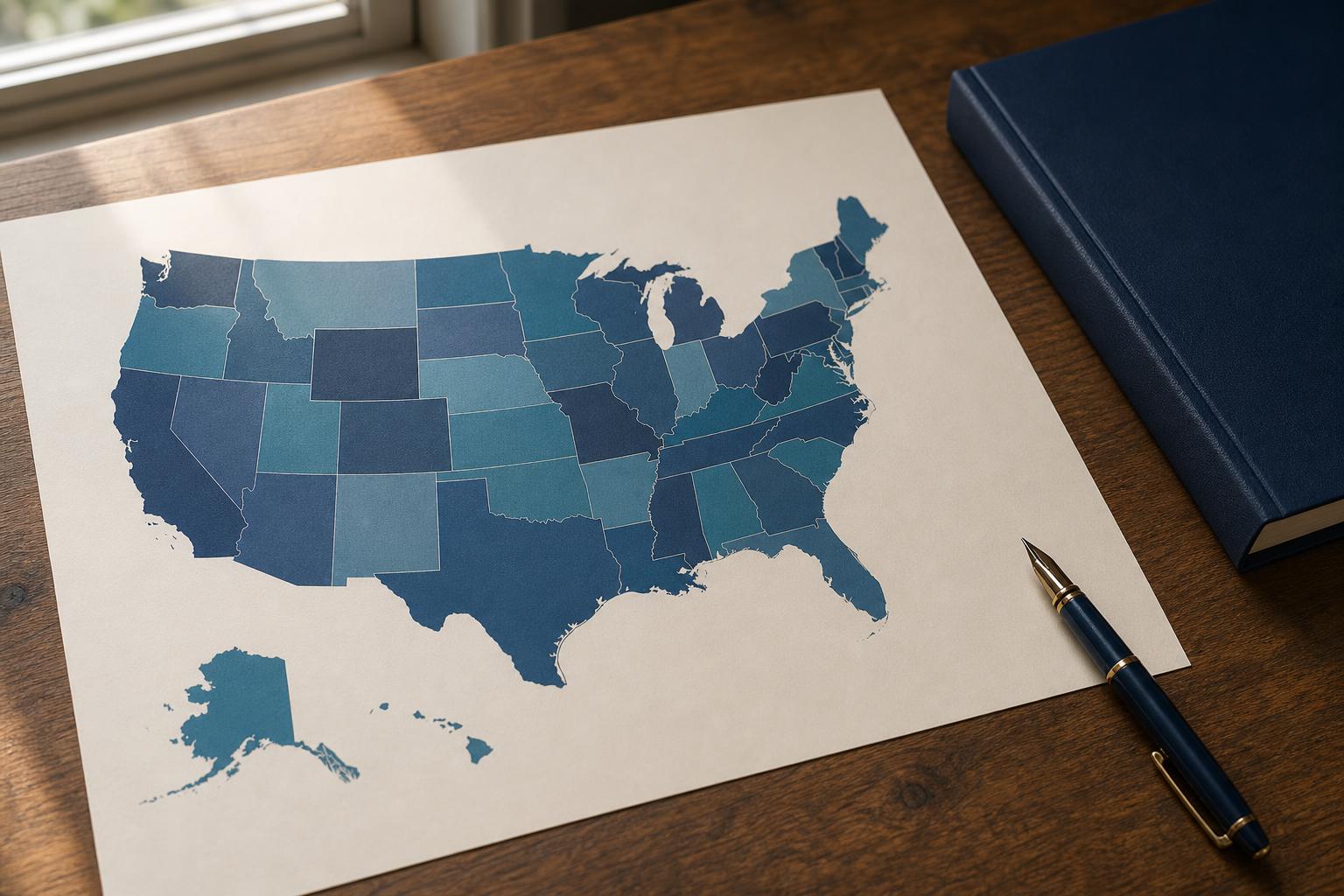
Twenty-seven states had their own buyer-broker agreement statutes on the books before the settlement took effect — and those state laws take priority over NAR's requirements wherever the two overlap. Since then, a second wave of legislation has pushed states in opposite directions. California and New Jersey codified written buyer agreements into state law with requirements stricter than the settlement. Texas followed with its own statute effective January 1, 2026. Meanwhile Alabama and Mississippi passed laws that loosen the tour trigger, letting buyers see homes before signing anything.
The result: an agent's disclosure obligations in Birmingham are materially different from the same agent's obligations across the state line in Atlanta. If you practice in multiple states, hold referral relationships across state lines, or run a team that does, you need to know which regime applies — and you need an audit trail proving you complied with the right one.
This guide breaks down all 50 states (plus D.C.) in one table: what triggers a written agreement, what your compensation disclosure must contain, the governing statute or rule, and how ShowSmartly behaves in that jurisdiction.
Why state rules vary so much
Three layers of rules stack on top of each other in every transaction:
Layer 1: The NAR Settlement (national)
If you're an MLS participant, you must (a) enter a written agreement with a buyer before touring a home — including live virtual tours, (b) state compensation in a specific, objective way (flat fee, percentage, or hourly — never "whatever the seller offers"), (c) never receive more than the agreed amount from any source, and (d) keep offers of compensation off the MLS. These obligations come from the settlement, not statute — they bind through NAR membership and MLS participation agreements.
Layer 2: State license law (varies)
Twenty-seven states regulate buyer-broker agreements directly through statute or administrative rule, covering everything from who may sign, to mandatory term-length limits, to whether the compensation amount must appear in the agreement itself. Sixteen of those states require the agreement to state the amount of compensation or a clear method of calculating it. Two (Alaska and Vermont) prohibit dual agency outright, which changes what must be disclosed when representation overlaps.
Layer 3: Post-settlement statutes (the new wave)
Since August 2024, legislatures have started writing the settlement's concepts into law — sometimes more strictly, sometimes less:
- New Jersey moved first. The Real Estate Consumer Protection Enhancement Act (effective August 1, 2024) requires a brokerage services agreement before — or as soon as practical after — brokerage services begin.
- California's AB 2992 (effective January 1, 2025) mandates a written buyer-broker representation agreement and caps its duration at 90 days for individual buyers, with no automatic renewal.
- Texas SB 1968 (effective January 1, 2026) requires a written agreement before any substantive action — an agent can unlock a door without a signed agreement, but cannot offer advice or opinions on the property.
- Alabama's HB 230 (Act 2025-59, effective April 18, 2025) went the other way: buyers only need to sign before submitting an offer, not before touring.
- Mississippi SB 2713 (March 2026) made agreements optional for home tours entirely, requiring them only before listing a home or when submitting an offer if the agent will be compensated.
Where state law and the settlement conflict, state law wins — but for NAR members, the settlement still applies wherever state law is silent or less specific. Alabama agents who belong to NAR and use an MLS still face the settlement's written-agreement-before-touring obligation as a matter of MLS policy, even though state law no longer requires it. That tension is exactly why the "which rule applies to me" question has become the most common compliance question of 2026.
How to read the table
Each state falls into one of five regimes: Codified — strict (post-settlement state statute requires written buyer agreements, at or beyond the settlement standard); Codified — relaxed (post-settlement statute that loosens the settlement's tour trigger); Statutory (pre-NAR) (pre-existing buyer-broker agreement statute or rule governs agreements and disclosure); Statutory + comp amount (as above, and the statute explicitly requires the compensation amount or calculation method in the agreement); NAR baseline (no state buyer-broker agreement statute; the settlement terms plus the state's general agency-disclosure law govern).
The ShowSmartly behavior column describes how our compliance engine treats showings and disclosures in that state — see ShowSmartly. In every state, ShowSmartly timestamps each disclosure, stores the exact language sent, and retains it in an exportable audit log.
The 50-state commission disclosure table (2026)
Maintained as a versioned dataset, re-verified quarterly. Last verification: June 2026.
Showing 51 of 51 jurisdictions · Last verified 2026-06
| State | Regime | Rules | Citation | ShowSmartly behavior |
|---|---|---|---|---|
| Alabama | Codified — relaxed | Agreement required before submitting an offer, not before touring (eff. 4/18/2025); RECAD framework otherwise unchanged; NAR baseline still applies to Realtors via MLS policy | HB 230, Act 2025-59; Ala. Code tit. 34, ch. 27 (RECAD) | Tours allowed pre-agreement; flags agreement requirement at offer stage; logs all disclosures |
| Alaska | Statutory (pre-NAR) | Written personal services agreement; dual agency prohibited; multi-party compensation permitted with consent | AS 08.88.600–.695 | Inserts comp disclosure in showing replies; dual-agency conflict alert enabled |
| Arizona | NAR baseline | Settlement terms govern; commission only enforceable under a written employment agreement stating compensation terms, with definite expiration date and all-party signatures | A.R.S. § 32-2151.02 | NAR-baseline template; written-agreement enforceability alert; full audit log |
| Arkansas | Statutory + comp amount | Agreement must state compensation; multi-party compensation allowed with specific disclosures | AREC Reg. 8 (Ark. Admin. Code 213.00.1-8) | Blocks showing reply until comp terms set; logs disclosure |
| California | Codified — strict | Written buyer-broker representation agreement required; max 90-day term for individuals, no auto-renewal; compensation must be specified | AB 2992 (2024); Civ. Code §§ 2079.13–2079.24 | Enforces agreement-before-tour; 90-day term expiry alert; logs disclosure |
| Colorado | NAR baseline | Settlement terms govern; Brokerage Disclosure to Buyer before eliciting confidential information; comp in signed Exclusive Right-to-Buy | 4 CCR 725-1, Rule 6.5 | NAR-baseline template + CO disclosure form reminder; audit log |
| Connecticut | Statutory + comp amount | Written agreement required; must state compensation amount; agency disclaimer for unrepresented parties | Conn. Gen. Stat. § 20-325a; Regs. § 20-325d-2 | Blocks showing reply until comp terms set; logs disclosure |
| Delaware | NAR baseline | Settlement terms govern; Consumer Information Statement (CIS) disclosure summarizing permitted/prohibited licensee conduct | 24 Del. C. § 2938 | NAR-baseline template; CIS reminder; audit log |
| District of Columbia | NAR baseline | Settlement terms govern; written brokerage relationship disclosure | D.C. Code § 42-1703 | NAR-baseline template; audit log |
| Florida | NAR baseline | Settlement terms govern; single agent / transaction broker disclosure regime; no general agreement-before-tour statute | Fla. Stat. § 475.278 | NAR-baseline template; transaction-broker language variant; audit log |
| Georgia | Statutory + comp amount | BRRETA requires written brokerage engagement stating compensation terms; shared-comp disclosure required | O.C.G.A. § 10-6A (BRRETA) | Blocks showing reply until comp terms set; shared-comp disclosure auto-included |
| Hawaii | Statutory + comp amount | Written agreement stating compensation; multi-party comp allowed with consent; shared-comp disclosure | HRS § 467-1.6 | Blocks showing reply until comp terms set; logs disclosure |
| Idaho | Statutory (pre-NAR) | Buyer representation agreements regulated; payment alone does not create agency; agency relationships description required | Idaho Code § 54-2089; Brokerage Representation Act (§ 54-2082 et seq.) | Inserts comp disclosure + agency description reminder; audit log |
| Illinois | Statutory + comp amount | Designated agency regime; agreement must state compensation; shared-comp disclosure required | 225 ILCS 454/15-75 | Blocks showing reply until comp terms set; designated-agency variant |
| Indiana | Statutory (pre-NAR) | Agency relationships description required; in-house agency permitted, subagency prohibited; shared-comp disclosure | IC 25-34.1-10 | Inserts comp disclosure; subagency block enabled; audit log |
| Iowa | Statutory (pre-NAR) | Written agreement regulated; multi-party comp with consent; shared-comp disclosure; payment ≠ agency notice | Iowa Code § 543B.56; 193E IAC ch. 12 | Inserts comp disclosure in showing replies; audit log |
| Kansas | NAR baseline | Settlement terms govern; BRRETA agency disclosure | K.S.A. 58-30,113 | NAR-baseline template; audit log |
| Kentucky | NAR baseline | Settlement terms govern; KREC agency consent agreement forms (Guide to Agency Relationships, Forms 400/401B) | KRS ch. 324; 201 KAR 11:121 | NAR-baseline template; KREC form reminder; audit log |
| Louisiana | Statutory + comp amount | Agreement must state compensation; multi-party comp permitted; payment ≠ agency notice | La. R.S. 9:3891–3899 | Blocks showing reply until comp terms set; logs disclosure |
| Maine | NAR baseline | Settlement terms govern; brokerage relationships disclosure | 32 M.R.S. § 13271 et seq. | NAR-baseline template; audit log |
| Maryland | Statutory + comp amount | Written agreement stating compensation; relationship disclosure; multi-party comp with consent; intra-company agency rules | Md. Code, Bus. Occ. & Prof. § 17-530 | Blocks showing reply until comp terms set; intra-company agency alert |
| Massachusetts | NAR baseline | Settlement terms govern; mandatory agency disclosure form at first meeting | M.G.L. c. 112; 254 CMR 3.00 | NAR-baseline template; first-meeting disclosure reminder |
| Michigan | NAR baseline | Settlement terms govern; service provision disclosure | MCL 339.2517 | NAR-baseline template; audit log |
| Minnesota | Statutory + comp amount | Written agreement must state compensation and termination terms; override clauses regulated | Minn. Stat. § 82.66 | Blocks showing reply until comp terms set; override-clause alert |
| Mississippi | Codified — relaxed | Agreement optional for tours (SB 2713, 2026); required before listing or at offer if agent is compensated; NAR baseline still applies to Realtors via MLS policy | Miss. SB 2713 (2026) | Tours allowed pre-agreement; flags agreement requirement at offer stage |
| Missouri | Statutory (pre-NAR) | Written agreement regulated; multi-party comp; shared-comp disclosure; payment ≠ agency notice | Mo. Rev. Stat. §§ 339.710–.860 | Inserts comp disclosure in showing replies; audit log |
| Montana | NAR baseline | Settlement terms govern; relationship disclosure | MCA 37-51-310 | NAR-baseline template; audit log |
| Nebraska | Statutory (pre-NAR) | Written agreement before brokerage activities; multi-party comp with written consent (no third parties); shared-comp disclosure | Neb. Rev. Stat. §§ 76-2422, 76-2424 | Blocks showing reply until comp consented; logs disclosure |
| Nevada | NAR baseline | Settlement terms govern; Duties Owed form | NRS 645.252 | NAR-baseline template; Duties Owed reminder |
| New Hampshire | Statutory + comp amount | Written agreement must state compensation; agency disclosure at first business meeting | RSA 331-A:25-b | Blocks showing reply until comp terms set; logs disclosure |
| New Jersey | Codified — strict | CPEA (eff. 8/1/2024): brokerage services agreement before or as soon as practical after services begin; comp amount required; shared-comp disclosure | N.J. CPEA; N.J.A.C. 11:5-6.9 | Enforces agreement-first workflow; comp + shared-comp disclosure auto-included |
| New Mexico | NAR baseline | Settlement terms govern; broker duties disclosure | 16.61.19 NMAC | NAR-baseline template; audit log |
| New York | NAR baseline | Settlement terms govern; § 443 agency disclosure form at first substantive contact | N.Y. Real Prop. Law § 443 | NAR-baseline template; § 443 form reminder; audit log |
| North Carolina | Statutory (pre-NAR) | Buyer agency agreements must be written and signed no later than the time an offer is made; any agreement binding the buyer for a term or restricting them to one agent must be written from formation; Working With Real Estate Agents disclosure at first substantial contact | 21 NCAC 58A .0104 | Inserts comp disclosure; agreement-before-tour reminder (MLS policy for Realtors); WWREA reminder; audit log |
| North Dakota | Statutory + comp amount | Buyer-broker agreements must be written and state compensation amount; agency disclosure before signing | N.D. Admin. Code 70-02-03-05.1, -15 | Blocks showing reply until comp terms set; logs disclosure |
| Ohio | Statutory + comp amount | Written agreement stating compensation; agency relationships description; multi-party comp permitted | ORC §§ 4735.56–.58 | Blocks showing reply until comp terms set; logs disclosure |
| Oklahoma | NAR baseline | Settlement terms govern; written disclosure of broker duties required before a party signs a purchase contract; dual-services notice when serving both parties | 59 O.S. §§ 858-351–363 (§ 858-355.1) | NAR-baseline template; broker-duties disclosure reminder; audit log |
| Oregon | Statutory (pre-NAR) | Agency relationships regulated; shared-comp disclosure; payment ≠ agency notice | ORS 696.800–.870 | Inserts comp + shared-comp disclosure; audit log |
| Pennsylvania | Statutory + comp amount | Written agreement must state compensation (fee/commission), term, and services; consumer notice required | 63 P.S. § 455.606a (RELRA) | Blocks showing reply until comp terms set; consumer notice reminder |
| Rhode Island | NAR baseline | Settlement terms govern; relationships disclosure | R.I. Gen. Laws ch. 5-20.6 | NAR-baseline template; audit log |
| South Carolina | Statutory (pre-NAR) | Brokerage relationships explanation at first substantive contact; agency disclosure; written agreements regulated | S.C. Code § 40-57-370 | Inserts comp disclosure + relationship explanation; audit log |
| South Dakota | NAR baseline | Settlement terms govern; agency disclosure | SDCL ch. 36-21A | NAR-baseline template; audit log |
| Tennessee | NAR baseline | Settlement terms govern; verbal disclosure of agency/facilitator status to unrepresented parties before services, confirmed in writing before an offer is prepared, with signed receipt | Tenn. Code § 62-13-405 | NAR-baseline template; status-disclosure reminder; audit log |
| Texas | Codified — strict | SB 1968 (eff. 1/1/2026): written agreement before any substantive action; must state services, term, exclusivity, compensation, and negotiability disclosure; IABS form at first substantive contact | Tex. SB 1968; TRELA § 1101.558 | Enforces agreement-before-advice workflow; IABS reminder; negotiability language auto-included |
| Utah | Statutory (pre-NAR) | Written agreements regulated by rule; dual/limited agency with informed consent | Utah Code ch. 61-2f; Utah Admin. R162-2f | Inserts comp disclosure; limited-agency consent alert |
| Vermont | Statutory + comp amount | Buyer service agreement must state compensation; dual agency prohibited; shared-comp disclosure | 04-030-290 Vt. Code R. | Blocks showing reply until comp terms set; dual-agency conflict block |
| Virginia | Statutory + comp amount | Written agreement must state compensation; relationship disclosure; confidentiality duties survive termination | Va. Code §§ 54.1-2130–2145 | Blocks showing reply until comp terms set; logs disclosure |
| Washington | Statutory + comp amount | Written services agreement; compensation may be paid by any party or shared between firms with consent; agency law pamphlet required | RCW 18.86.010–.120 | Blocks showing reply until comp terms set; agency pamphlet reminder |
| West Virginia | NAR baseline | Written notice of agency relationship (commission form) before signing any representation or sale contract; representation contracts must carry a definite expiration date | W. Va. Code § 30-40-26 | NAR-baseline template; expiration-date alert; audit log |
| Wisconsin | Statutory (pre-NAR) | Written agreement regulated; relationship disclosure per REEB rules; designated agency permitted | Wis. Stat. § 452.135; REEB 24.07 | Inserts comp disclosure; designated-agency variant; audit log |
| Wyoming | NAR baseline | Brokerage relationship disclosure with signed acknowledgment; no representation agreement is valid until the disclosure is executed | Wyo. Stat. § 33-28-306 | NAR-baseline template; disclosure-before-agreement enforcement; audit log |
Get the 50-state table as a CSV + printable PDF
Versioned dataset, updated quarterly. Enter your email and we’ll start the download.
We’ll email occasional compliance updates. Unsubscribe anytime.
Prefer paper? Open the printable version and use your browser’s Print → Save as PDF.
Five states worth a closer look
California: the 90-day clock
AB 2992 doesn't just require a written agreement — it caps the agreement's life at 90 days for individual buyers and bans automatic renewal. If your buyer's search runs long (and in 2026 inventory, it does), you need a re-signing workflow, and every re-signed agreement is a fresh disclosure event. Teams that don't track expiry dates are quietly working without representation agreements — and without a right to compensation. See the CA DRE consumer alert.
Texas: the "substantive action" line
Under SB 1968, the trigger isn't the tour — it's advice. An agent may open the door, but the moment they offer an opinion on the property, they've taken substantive action and need a signed agreement. In practice, "just looking" showings are now a compliance tightrope, and the safest workflow is agreement-first anyway.
Alabama and Mississippi: relaxed by statute, not in practice
Both states now permit touring without a signed agreement. But a Realtor using an MLS is still bound by the settlement's agreement-before-tour rule as a matter of membership and MLS policy. The state law mostly protects non-NAR licensees — and creates a documentation trap for everyone else who assumes "state law says I don't have to."
New Jersey: services trigger, not tour trigger
The CPEA attaches the agreement obligation to rendering brokerage services, which begins earlier than a tour — arguably at the first substantive consultation. New Jersey agents should treat the intake conversation as the trigger.
Vermont and Alaska: no dual agency, period
Both prohibit dual agency outright. When two clients of the same brokerage converge on one property — common in multi-offer situations (multi-offer analysis) — the conflict has to be caught and disclosed before it matures into a violation.
Audit-trail considerations: proving you disclosed
Every regime above shares one practical truth: in a dispute, an MLS audit, or a license-board complaint, the question is never just "did you disclose?" — it's "can you prove when, to whom, and in what words?"
A defensible commission-disclosure audit trail has four properties: (1) Timestamped delivery — not "we always send it," but a record that this disclosure went to this person at this time, before the showing or substantive action that triggered it. (2) Exact language preserved — boards ask for the words used; standardized, versioned templates solve this. (3) State-correct content — a disclosure that satisfies Florida's transaction-broker regime may fail Pennsylvania's compensation-amount requirement; the record should show the right template was used for the right jurisdiction. (4) Tamper-evident retention — records assembled after the complaint arrives are worth less than records generated automatically at the moment of disclosure.
This is where manual workflows break down. An agent juggling 30 showing inquiries a week will eventually send a late disclosure, a wrong-state template, or no disclosure at all — and won't know which one it was. ShowSmartly's AI showing assistant generates the disclosure inside every showing reply, selects the state-appropriate language automatically, and writes each one to a permanent, exportable audit log. When the audit letter comes, the answer is an export, not an archaeology project.
For a deeper dive on what the disclosure itself should say — sample language, timing rules, and the most common mistakes — see our commission disclosure best practices guide.
Frequently asked questions
Which takes priority — my state's law or the NAR Settlement?
State law takes priority where the two conflict. But the settlement still binds NAR members and MLS participants wherever state law is silent or less specific. In relaxed states like Alabama and Mississippi, Realtors generally still need agreement-before-tour under MLS policy even though state law doesn't require it.
How many states have their own buyer-broker agreement laws?
Twenty-seven states had buyer-broker agreement statutes or rules before the settlement, per NAR's own state-groupings analysis. Since then, California, New Jersey, and Texas have added post-settlement statutes, and Alabama and Mississippi have passed laws relaxing the tour trigger. HousingWire's tracker covers ongoing bills.
Does my buyer agreement have to state an exact compensation amount?
Under the NAR Settlement, yes — compensation must be objective and specific (flat fee, percentage, or hourly rate), and you may never receive more than the agreed amount from any source. Sixteen states additionally require the amount (or calculation method) in the agreement by statute.
What happens if I show a home without a signed agreement?
Depending on your state: nothing (Mississippi and Alabama, for tours), a statutory violation (California, or Texas if you offered advice), a forfeited right to compensation (California, Arizona), or an MLS policy violation and association discipline (everywhere, if you're a Realtor). The settlement obligation applies to live virtual tours too.
How often does this table change?
Frequently — at least a dozen legislatures have buyer-agency bills in motion in 2026 (Wyoming, West Virginia, and Oklahoma among them). We re-verify the dataset quarterly and note the last verification date above the table.
Start saving 10+ hours a week
Join the listing agents and teams using ShowSmartly to handle showing replies, multi-offer analysis, and team KPIs — automatically.
Start free trial